Tag: food

  • Understanding Restaurant Hours: When Is It Too Late?

    Understanding Restaurant Hours: When Is It Too Late?

    Every now and again you may hear people talking about an experience they have at a restaurant.

    Here is a sample scenario.

    The restaurant has posted hours of 10:00 AM to 10 PM. The restaurant hours are posted on their website, their Yelp page and on their front window.

    A person, couple or group walk in at 9:55 PM expecting to be served.

    Here is the typical battle.

    Some people think the person, couple or group are out of line expecting the restaurant to serve them so close to closing time.

    Some people think that since the restaurant is open, a person, couple, or group walking in a few minutes before they close is fine.

    Before taking sides, lets restate the obvious.

    According to the restaurant’s published information, they are open from 10 AM – 10 PM. The restaurant is open, preparing food and ready to accommodate customers.

    A person, couple or group walking into an open business has a legitimate expectation of being served.

    The arguments made by those who believe “customers are out of line for walking in so late ” make several points. First, the kitchen is already in the process of cleaning up. Second, the staff wants to get home when their shift is over. Third, how fresh can the food actually be just a few minutes before closing? Finally, just because a place is open, doesn’t mean that they are cooking.

    The argument being made by the “restaurant is open, a person or couple or group walking in at any time is fine” is simple:
    * If you say you’re open, you’re open.

    Of course a restaurant has the right to refuse any business. If they really do not want to serve people at 9:55 PM, they just need to inform the customers. They can simply say that the kitchen is closed. It is fair. It is understandable. It just does not make them right.

    The person that greets the customers first can simply say “since it’s so late there is just a very limited menu available.”  That limited menu could be true. However, because the hours do not state the limited menu with its later hours, it is not being advertised correctly.

    What’s the most reasonable way to handle these late night feasters?

    A simple change to the restaurant signage, an update to it’s website and it’s Yelp page.

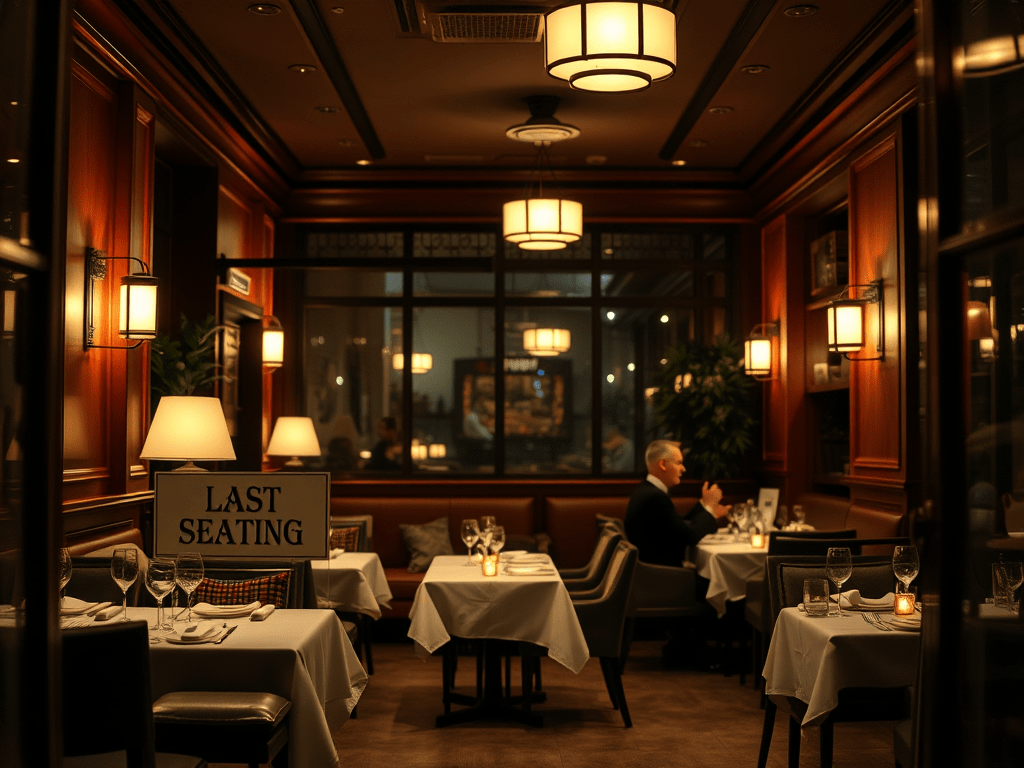
    “Open at 10 AM – 10 PM. LAST SEATING AT 9:30PM”

    This simple change makes it clear. The restaurant opens its doors at 10 AM. It closes its doors at 10 PM. No customers will be seated after 9:30 PM.

    Believe it or not, I have been vilified for making that suggestion on other threads. No one can tell me why that is a bad idea. By simply adding LAST SEATING AT offers clear communication. It gives the staff a proper reason for rejecting the 9:55 PM customer. It also educates potential customers to avoid false expectations.

    Another alternative would be a sign that says:
    Open from 10 AM – 10 PM, Limited Menu after 9:00 PM.

    Like the previous suggestion, this wording sets accurate expectations for staff and customers alike.

    Until things change, a restaurant should expect to serve customers during their posted hours. If seating someone at 9:59PM is something you do, serve them.

    It would be nice for people not to walk into a restaurant 3 minutes before closing. Can you blame a hungry customer for wanting to give a business money during their posted hours of operation? Especially if you let them in, seat them and hand them menus?

    What do you think?
  • Rethinking Tipping: A Service-Based Approach

    Rethinking Tipping: A Service-Based Approach


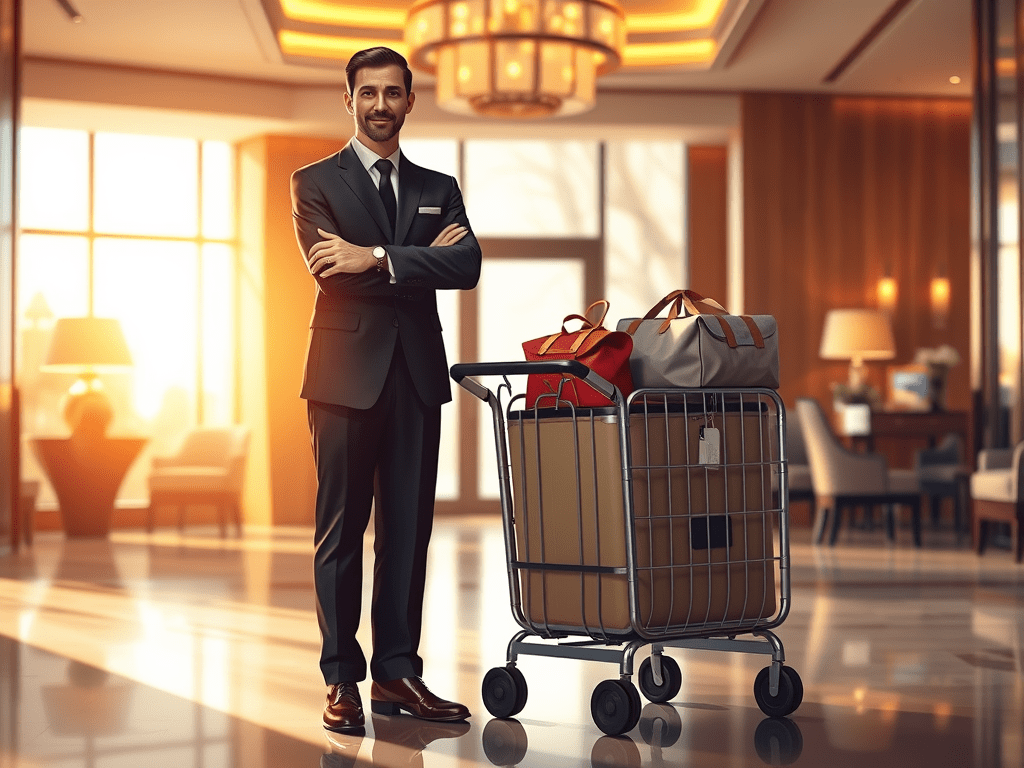
    My first job out of school was as a tipped employee. I was a bellman at a hotel. I was paid a whopping $2.01 an hour, plus tips.

    Unlike servers or bartenders that are tipped based on menu prices, bellmen weren’t tipped based   on hotel room rates. If we were I would still be working as a bellman.

    Back then, in the early 1980’s a dollar a bag was the standard tip rate for a bellman. If a small cart was used, the expected tip was $3. If a large cart was used, $5 was the expected tip.

    Fewer hotels have bell staff these days, but I would imagine that the expected tip rate is about the same.  Why? It’s easy to calculate, the level of effort to move bags hasn’t changed and tipping isn’t a legal requirement.

    Don’t feel sorry for bellmen or doormen. The bigger hotels, especially in big cities, are easily pulling in $75,000 or more a year.  Oh, it doesn’t get declared for taxes, but they are doing fine. 

    I worked in a suburban hotel. I was making good money (not downtown money, but good money.  I also paid taxes on my tips.

    Back in the early 80’s a restaurant server expected a tip of 10% of the menu price, total bill. Over time that expectation became 15%, then 20%. For whatever reason some servers now expect 25%.

    You go to a hotel, a bellman carries 4 bags, you tip $4.  You go to the hotel restaurant. You tip 20% of some arbitrary menu price. This doesn’t reflect anything about the quantity or quality of work the server actually does.  

    Let’s use another industry and their prices as a comparison.

    You go to the local gas station. Monday gas is $3.33. Tuesday $3.18. Wednesday $3.05, and Thursday gas is $3.45.

    Pretend you live in New Jersey. You get all your gas on the Turnpike. Pretend that you have to tip 10% of the price per gallon.  That’s $0.33 Monday, $0.31 Tuesday, $0.30 Wednesday and $0.34 on Thursday per gallon.  

    Did the person pumping gas on Wednesday for a $0.30 per gallon tip work harder than he or she did on Thursday when tipped $0.34 per gallon? They did the exact same thing. They were tipped based on arbitrary prices. This had nothing to do with service or level of effort.  That makes NO sense.

    That is the world of restaurants today. A tipping system that makes no sense.

    Yet no one seemingly wants to end the tipping game.


    Why would the owners? They get to not pay their staff. Why would the servers? They get to change the standard of what is expected. The government is treated to lots of goodies from the lobbyists and we know politicians won’t walk away from freebies. The Unions should protect their members. Instead, unions are a business wanting to ensure employees can pay their dues. Consumers just want to eat food that hasn’t been spit in.  

    So who is going to propose a change? Me.

    Instead of ending tipping, let us make tipping a service driven earned income vs menu based given.

    For example:
    A party of 4 goes to a restaurant. The server goes to the table to take drink orders. They deliver the drinks. Then, they take appetizer orders and deliver the appetizers. They get dinner orders and deliver dinner. They then take coffee or dessert orders and deliver them. The server refills drinks twice and drops off the check.  That’s 13 trips to the table. Let pretend each interaction lasts an average of 1 minute.  AVERAGE.

    That’s 13 minutes worth of customer face time. Add in the trip time from kitchen or bar and back to the table, another 13 minutes.

    Each person pays $0. 20 cents a trip and $0.05 for the walk time to and from the kitchen.  Each person would pay $3.25 in tip, total table would tip $13.00.  The server would make $13 for roughly 26 minutes of work. Extrapolate that over an hour and a server would make just about $30 an hour.

    Most servers work at least 3 tables at a time. A server could earn $90 an hour based on their actual work. They would earn this money and menu prices would no longer matter.

    The harder working Denny’s server could make just as much money as Ruth’s Chris Server.

    Yes, smaller parties would pay less, larger parties would make more. Yes, the customer would need to track the number of visits to the table. The per table visit pay scale incentivizes the server to provide more attentive service. Since even under this process, paying the server just because they showed up would be optional.

     Servers would now have a real incentive to provide quality and quantity service. Quality and quantity, two things that aren’t required now.

    Restaurants that use food expediters would take part in the tip pool. Drink fillers would also participate. They would still work on the same systems and percentage scale they use now.

    Taxes would also be reported the same as always.

    If every person who does anything for you is asking for a tip, say no. Only tip if you feel they actually earned it. It’s time to shut down these ever-increasing number of hands that want to be tipped.

    Sorry hot dog concession stand at cashless stadiums. You don’t get tipped for not moving to hand me a hot dog.

    Sorry 7-11 clerk, you selling me a Big Gulp I poured myself doesn’t earn you a tip.

    Sorry cashier. You didn’t walk more than 2 feet to grab a pack of cigarettes or a box of condoms. You don’t get a tip either.

    There is an easy way to make the service industry better. The pay can be more stable. Tipping can also be quantified and measured.

    Don’t you think it’s time?